Seductive Sounds of Terror – Ten Favorite Horror Scores

So, some time back I put out a list of ten “songs of the summer,” all original songs written/recorded for 80s horror flicks that just said, “summer” to me. At the time, I excluded horror scores from the list as that really could be its own post. And now it is. This post here.

What is it about them that’s so addictive? I mean, film music can be perfectly enjoyable from any genre if the composition is strong, but there is something about music orchestrated to both pull you in and set you on edge that is really compelling for me. One of my jobs (proofreading translations) is very detail oriented and I very often put on music from some horror film while I’m doing it. I need energy and focus, but I can’t be distracted by words, and the drive, playfulness, and bite of a good horror score always hits the spot, keeping me moving, but also alert. Plus, they just put me in a good mood.

So, for this list, again, I’m setting myself some rules (which I might also let myself break). I’ll only include full scores. There are so many really rocking themes that stand on their own, but for which I’m not really familiar with the whole score they’re from (or sometimes, a whole score wasn’t even written – but there is one great theme), so while I love, for example, the main themes to Gremlins, Rosemary’s Baby, The Psychic, Exorcist II: The Heretic, Chopping Mall, or just about every John Carpenter movie, I’m not going to put them on this list.

Also, I’m going to try to stick to a one per composer/director rule, but that will be hard, particularly in terms of the Italians and, again, John Carpenter, so we’ll see how well I do with this one.  Anyway, here, in no particular order, are my ten favorite horror scores. Enjoy!

Candyman (1992) – Philip Glass

CANDYMAN (1992) [FULL VINYL]

We may be starting with my favorite. Philip Glass is a modern, minimalist composer and his score is, at once, quite spare – a few instruments, mostly the organ, and a chorus, building repetitions of simple themes, while being at the same time grand, romantic, mournful, gothic, and full of dread. The pulsing repetitions become claustrophobic, though the themes being repeated can be quite pretty, and there is an edge of something unresolved stretched across the composition. There are no stingers to accompany jump scares, but it is unsettling, uncanny, and beautiful – the perfect accompaniment to the film’s central themes. I pretty much think this film is a masterpiece, but I don’t know how true that would be without this tremendous music to raise its effect. Also – I’ve been using the music box theme that kicks it off as my ringtone for at least the last fifteen years.

Daughters of Darkness (1971) – François De Roubaix

DAUGHTERS OF DARKNESS (1971) [FULL VINYL]

Sensual and atmospheric, the music here fluctuates between an erotic early seventies groove, a languid, classy waltz that implies something much older and aristocratic, and this hypnotic spookiness that seduces, but still has a bit of an edge. There are themes that repeat, but often with different instrumentation, or carrying a slightly different vibe. It is all playful, varied, and also pretty steamy. And it just works so well in the film, helping to build the enveloping atmosphere of the whole piece.

Dracula (1992) – Wojciech Kilar
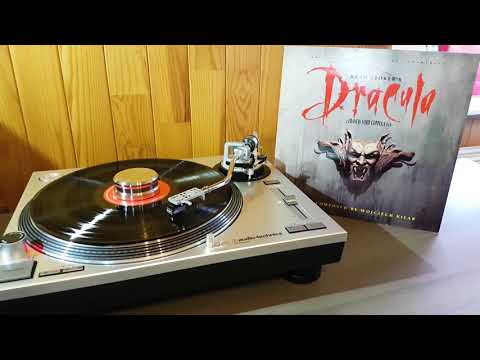
Dracula (1992) Soundtrack (Full vinyl Rip)

This was the first film score that I ever bought, so enamored was I with Coppola’s rich, romantic, colorfully extravagant interpretation of Stoker’s story. The music is grandiose and monumental to the point of being intimidating. Kilar’s score is a building storm of orchestral power, driving and intense. Subtle it is not, but neither is the film, and I think they make a perfect pairing. Also, I haven’t found confirmation of this anywhere, but I feel like it includes a really interesting musical reference to the 1922 score to Nosferatu, the granddaddy of vampire cinema. Listen to the first track, “Thema I” or the penultimate track, “Nosferatu saugt Ellen und stibt im Morgengrauen” and see if it doesn’t feel familiar.

Phantasm (1979) – Fred Myrow & Malcolm Seagrave
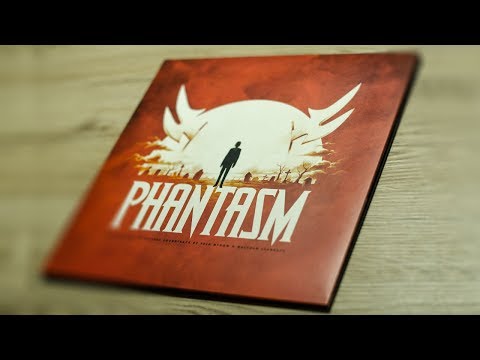
"Phantasm" Full Vinyl Soundtrack by Fred Myrow & Malcolm Seagrave

Phantasm has one of the most iconic main themes in the genre, living in my head in close proximity to Carpenter’s theme for Halloween, both eking maximum effect out of a really small handful of notes. But that is only the beginning. The rest of the work, featuring a wide and eclectic array of percussion instruments and gloriously atmospheric synthesized soundscapes, is just as creepily inviting and sublimely weird. It ranges from alien discordance to a disco funk, from gothic spookiness to avant-garde pandemonium, all matching the film’s home-spun idiosyncrasies beat for beat.

City of the Living Dead (1980) – Fabio Frizzi / The House by the Cemetery (1981) – Walter Rizzati

Ok, so I’m breaking a rule here as this Sophie’s choice between these scores to two entries in Lucio Fulci’s Gates of Hell trilogy is just too much for me. (The Beyond is good too, but these two just blow me away.) They are for two films from the same director, but at least the composers are different, so that’s something. But they are equally compelling, and well suited to their respective flicks.

Going chronologically, City of the Living Dead is sometimes mysterious, sometimes rocking, and always eerie. Frizzi is really one of the best in the game, so it was hard to choose just one piece of his, but in the end, I just can’t get over the gothic, incessant atmosphere of this one. It’s a great space to dwell in, with strange, distorted sounds that still retain musicality, with a kind of implacable lurching towards the grave, and with a guitar solo on one track that seems exactly like something David Gilmore of Pink Floyd would have produced.

The House by the Cemetery // Walter Rizzati -- Death Waltz Records [Full Vinyl Rip]

The score for The House by the Cemetery works in a similar mode, but stakes out its own ground. There is a creeping dread here mixed with a kind of enraptured nostalgia. The second track, “I Remember,” I could listen to all day. There is an emotional tension that pairs so well with this gory, gorgeous film of nightmare logic and the wicked Doctor Freudstein.

The Burning (1981) – Rick Wakeman

The Burning OST (1981) [Vinyl]

This one, very simply, just rocks! Rick Wakeman, a keyboardist for the band Yes (i.a., Owner of a lonely heart) really soars here. It swings between a lyrical beauty appropriate to the natural setting of this summer camp set slasher and a stomping synthesized rock sound, effectively intense in underscoring the film’s mayhem and murder. And it all just sounds so cool and weird. There are sounds here that only a synth could make, which are not trying to imitate anything that came before, which are odd, but really work in the film. And aside from the film, as a standalone album, it is all just so much fun.

Suspiria (1977) – Goblin
Dario Argento's ‘Suspiria’ – Full Vinyl Soundtrack by Goblin

This is another impossible choice. I could have just as easily listed the score for Profundo Rosso or Tenebrae, but I am only allowing myself one Goblin scored Argento flick. And the film showcases the music so well. The opening sequence is a prime example: Suzy arriving at the airport, with the music swelling each time the doors open, letting in both the sound and the storm, the main theme implying the violent threat of this black forest fairy tale setting she is so vulnerably walking into. She goes through the automatic doors into a raging storm, at once entering a world of magic and threat and cool, weird melodies accompanied by creepy voices singing “la, la, la, la”. Goblin’s music is sometimes delicate, sometimes darkly enveloping in its creepy awesomness, and sometimes discordantly disquieting (while ironically being pretty loud), really setting nerves on edge. But the overall effect is glorious, absolutely integral to the film, and a perfect complement to Argento’s technicolor visual assault, all resulting in an effective, delirious, addictive sensory overload of a movie.

The Fog (1980) – John Carpenter

The Fog Soundtrack (Blake's Gold Edition) [Full Vinyl Rip] Part 1

“11:55, almost midnight. Enough time for one more story. One more story before 12:00, just to keep us warm.” This is another nail biter of a choice. I doubt anyone else has crafted so many recognizable, iconic themes, particularly while working with a pretty contained palette, but I think this is my favorite. Endlessly atmospheric and catchy, he laid down the perfect foggy sound for his old fashioned fireside ghost story of deadly revenge rolling in from the sea. There is a fragile sense of loss to the compositions, a palpable dread, and the hook of fascination that pulls you in even as you tremble – a delicious, doom-laden auditory treat.

The Wicker Man (1973) – Paul Giovanni and Magnet
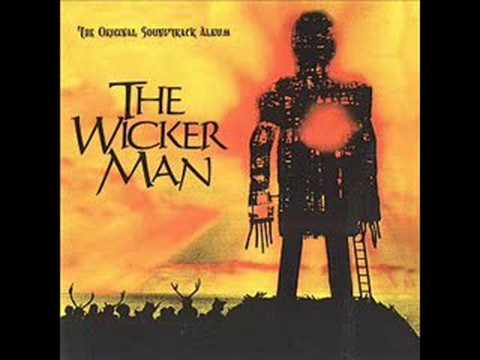
the wicker man ost-corn rigs

Again, I feel like I’m breaking my own rules as I hadn’t intended to include anything featuring songs with lyrics, but I just can’t leave this out, and with its folksy, historical charm, it is also a nice counterpoint to some of the other music on this list. The scoring, all based in traditional Scottish, English, and Irish music, really sets the stage for our visit to Summerisle, and perfectly gives voice to its inhabitants as they undergo their fiery celebration. And the songs that are sung, such as “Gently Johnny,” “The Maypole Song,” or “Willow’s Song” are such a significant aspect of how we see the life of the village – boisterous and lusty and joyfully pagan. As long as you’re not an overly religious and sexually repressed police sergeant investigating a missing child, it is unbelievably inviting. The first time I saw The Wicker Man, I hadn’t known what to expect and I was puzzled to discover that it’s kind of a musical, but now the sung portions are something I look forward to every time.

A note: I couldn’t find a clip with the whole soundtrack on Youtube, so the video above is just the first song. However, you can follow this link to a playlist that includes the full soundtrack.

Day of the Dead (1985) – John Harrison

Day of the Dead OST // Waxwork Records [FULL VINYL RIP]

This was another tossup – Harrison’s work for Creepshow is great, but the rising dread set to a sometimes calypso beat that he worked up for Romero’s third zombie outing just stands the test of time. We have the sustained tension fitting for this claustrophobic bunker setting, we have militaristic marches following the aggression of the army guys, and we have an essential weirdness well suited to the unknowable nature of the living dead. And somehow, even through the musical trepidation, there are odd notes of lightness and play. Some compositions really maintain an interesting tension and/or a balance between a bass-y low-end relentlessness and airy notes dancing about on top of it all. And it is just so effective in the film itself, which is of course the point.

Well that’s that. I hope this music serves you (whoever you may be) as well as it does me. May your hours in front of the computer be groovier – and more ominous.

Death by Stereo: Ten Songs of the Summer

So, every May/June, I visit my parents in Ocean City, MD to help them prepare a show that they will perform throughout the summer. It’s great that I’m able to make the trip and I always enjoy the work, but sometimes, it is just exhausting. My “workshop,” so to speak, is an out-door space and I’m generally working there from early morning until it starts getting dark each day. It’s a lot, especially when it’s a really hot day. But thank the gods for headphones and podcasts and playlists. And the other day, when it was particularly hot and sunny, and I was really low on juice, I put on a playlist I keep in my phone for just such occasions – my list of groovy tunes written for horror movies. It never fails to pick me up when I’m down or put a smile on my face. And honestly, I don’t exactly know why. Sure, some of the films these are from are comfort food favorites (see comfort food part I and part II) and it’s nice to have a song take you there, but not all are. But there is something about this confluence of an 80s synthesized sound (in most, but not all cases) and music made to accompany movies that were supposed to scare, while still being, you know, fun – it just hits a particularly sweet spot for me.

And I thought, “Hey, that’s something worth sharing!” So, today I’m going to run down ten songs on my list. I noticed that most were already from the eighties, so I restricted the set to that decade. I’m excising from the list any cuts from scores (I’m sure that could be a whole other post) or songs not written for the film in question, but just used on the soundtrack. I’m also not taking more than one song from a given source, with apologies to the soundtracks to The Lost Boys, Fright Night, and The Return of the Living Dead (all of which offer their own complete iteration of this list), so sometimes, hard decisions have had to be made about what to leave out. 

Every year, I hear people talk about what the ‘song of the summer’ is. Well, something about all of these just feels like summer somehow. I suppose some are from real popcorn horror movies, while some just feel hot, I guess. But beyond that, in the summer, when it’s hot and sunny outside, I just love to hide in a dark, air conditioned room and watch something that will give me chills. So maybe all horror music feels like the summer to me.

That said, let’s get into it and run down this list of “Ten Songs Written for Eighties Horror Movies, Not Including Score Orchestration!” (catchy title, huh?) These come in no particular order, really just the sequence I hear them in my playlist.

Dream Warriors – Dokken (1987): Nightmare on Elm Street 3

Dokken - Dream Warriors (Official Music Video)

I’ve already written about my appreciation for this series entry – I think it’s probably the best example of what Nightmare on Elm Street movies have to offer. And this song is a part of that. I mean, the whole film is just such a good time and having a song to rock out to where you find yourself screaming out the name of the film is just such cheesy, glorious fun. I think for horror to work, you have to be open to it. You can’t be too cool to get scared or it won’t work. Maybe that’s why so many of the songs on this list, this one certainly included, are so unabashedly sincere, and rocking.

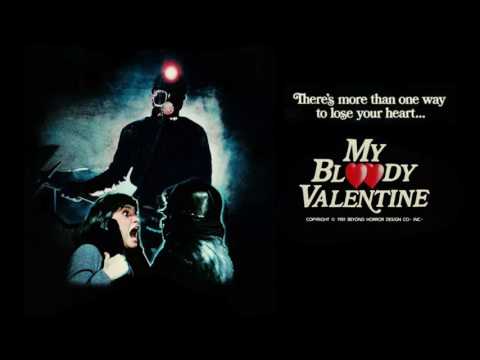
The Ballad of Harry Warden – Paul Zaza (1981): My Bloody Valentine

I just love a folksy ballad about murder and/or a disaster. Old broadsheet ballads, Nick Cave, The Willow Garden, The Wreck of the Edmund Fitzgerald; that kind of thing is rather my jam. And this tune, which plays over the credits of My Bloody Valentine, one of the better entries (I think) of the first slasher cycle, really delivers the atmosphere, the nostalgic regret, and the beauty that the film deserves. It’s just so very pretty, but it’s got this pinch of pain, of threat. It’s a great song for a singalong around a campfire, if only I weren’t so shy about playing my guitar in front of other people…

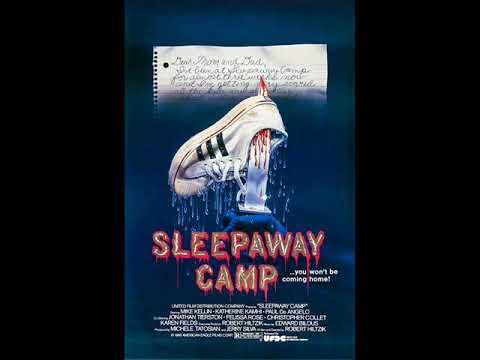
Angela’s Theme (You’re Just What I’ve Been Looking For) – Franki Vinci (1983): Sleepaway Camp

Frankie Vinci - Angela's Theme (Sleepaway Camp)

Sleepaway Camp is an easy movie to love (so intentionally sleazy and accidentally sweet, all while (I suspect) totally inadvertently making a case for trans rights, all in a dirty little slasher that seems to, more accurately than most, show kids at summer camp in a way that is oddly, rather believable (though I imagine there’s often less murder), and this ode to Felicia Rose’s Angela is one really groovy, synth-tastic gem. It plays over the credits, following a key moment which shouldn’t be spoiled if possible, and is in a kind of dialogue with that moment, allowing it to linger as the credits roll. It’s just the perfect cap to a really enjoyable flick.    

Pet Sematary – The Ramones (1989): Pet Sematary

Ramones - Pet Sematary (Official Music Video) [HD]

I remember being freaked out by the trailers on TV for Pet Sematary when I was a kid. I would have been 10 or 11 when it was being advertised and we had always had cats, so the image of Church, back from the dead and now evil, was just really disturbing for me – a mix of sad and wrong and scary that got under my skin. Many years later, I finally read the book and was struck with how ultimately mournful it all is, far more than scary. And yet, for the 1989 film, the Ramones contributed this upbeat anthemic rocker with downbeat lyrics (I don’t wanna be buried in a pet sematary – I don’t want to live my life again) for the end credits, and it’s hard not to bop your head when you hear it.

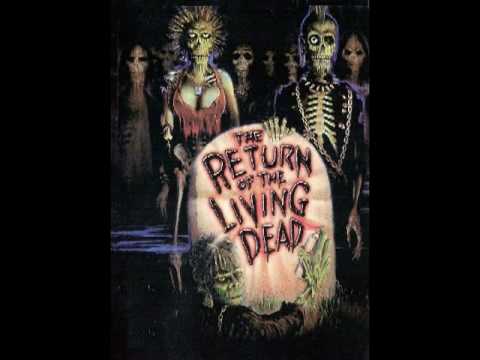
Tonight (We’ll Make Love Until We Die) – SSQ (1985): The Return of the Living Dead

SSQ - Tonight (We'll Make Love Until We Die)

It’s honestly difficult to pick just one song from this soundtrack, but in the end, I think this might be my favorite of them. It’s got a great sound, it is clearly for exactly this film with lyrics about rising from earth beds, smells gone sweetly rancid, and dancing among the dead, and it is the tune that plays during the iconic cemetery striptease that Trash (Linnea Quigley) performs right after voicing her fantasy about being eaten by old men and shortly before becoming zombified herself. How could I choose anything else?

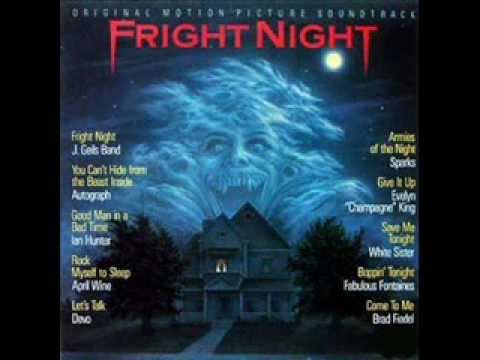
Come to Me – Brad Fiedel (1985):  Fright Night

Fright Night Soundtrack - Come To Me

An instrumental version of this song is used as the vampire seduction theme throughout both Fright Night and its sequel, but on the soundtrack album, words were added to make more of a pop tune out of it. Either way, it is a sultry, cool, evocative piece – utterly appropriate for apple eating, chunky knit sweater wearing vampires to beguile beautiful women to. And it’s a perfect accompaniment to Fright Night’s brand of good old fashioned vampire story meets modernity (ala 1985).  

Cat People (Putting Out Fire With Gasoline) – David Bowie (1982): Cat People

David Bowie Cat People Putting Out Fire Music Video HQ

Another song that has a different version on the album and in the film.  On Bowie’s Let’s Dance album, the song is sped up to be, I guess, more danceable (yes, let’s), and it’s fine. But the version made for the film with its slowed down intro is just so rich, with a gorgeous building tension that just explodes when it kicks into gear. Since Cat People (an interesting and enjoyable, and very 80s remake of the classic Val Lewton original), it’s been featured on a few other soundtracks. Notably, Tarantino put it to really good use in Inglourious Basterds, but its steamy quality just pairs so well with the sweaty, New Orleans set, sex obsessed film for which it was named.

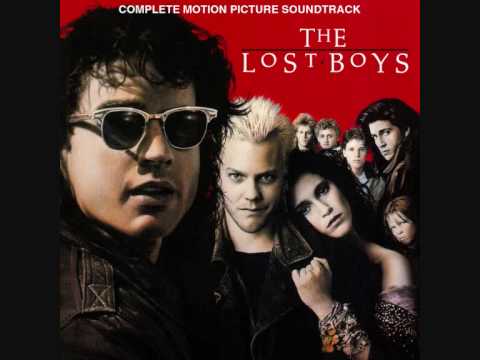
I Still Believe – Tim Cappello (1987): The Lost Boys

The Lost Boys - Soundtrack - I Still Believe - By Tim Cappello -

Ok, I’m breaking my own rule here. This wasn’t actually written for the movie. Apparently, the version in the film is a cover of a song by The Call, but Cappello did record this to be on the soundtrack. Anyway, it doesn’t matter. Cappello’s appearance in the film, performing this song, surrounded by fire, oiled up and swinging his sax around, is just perfect: exuberant, cheesy, over the top, totally earnest, and unapologetically passionate and joyful. It sets the tone for Santa Carla night life youth culture—everyone there is really having a fantastically amazing time (so much life) and amidst the hubbub, Michael and Star lock eyes. Their actual romance may feel tacked on (fueling those who claim the stronger connection is between Michael and David), but in this moment, the connection feels magical.

He’s Back (The Man Behind the Mask) – Alice Cooper (1986): Friday the 13th Part VI: Jason Lives

Alice Cooper - (He's Back) The Man Behind the Mask

Alice Cooper has at least three songs on the soundtrack of Jason Lives, but this is the only one that is really directly about the movie, or at least its titular killer. This is possibly the silliest of the Friday movies, and this celebratory ode to Jason fits in with it just great. Past that, it’s just a love letter to the whole slasher formula: kids fooling around in the woods, or out on lovers’ lake, and running into homicidal trouble in the form of a masked psychopath. It doesn’t feel like a horror movie exactly, but in some way, it can scratch the itch.

Maniac – Dennis Matkosky and Michael Sembello (1983): Flashdance / Maniac

Ok, this is a pretty odd inclusion. But it comes with a story. So apparently Matkosky had heard about some serial killer and it inspired him to start writing. Once begun, he and Sembello came upon William Lustig’s effectively gruesome 1980 horror film Maniac, and it gave them fuel to round out the rest of the lyrics with gems such as:

He’s a Maniac. He just moved in next door.

He’ll kill your cat and nail it to the floor.

(Though, to be fair, nothing like that actually happens in Maniac)

Somehow it got on the radar of Flashdance’s director, Adrian Lyne who requested they change the lyrics to be more about a girl who’s dancing and less about a serial killer involved in feline carpentry, and it became the MTV hit that everybody knows, but it all started with something pretty dark and playful. So I’ll leave you with that.

And that’s it for now. Maybe some other time, I’ll dig into some scores that I think stand out, but for now, I hope this helps enliven your summer months…

Top Ten Movies of 2021

Alright – here we are, having survived the trials and tribulations of the holidays and thankfully back to the grind of “regular” life. I had a little bit of a longer break between my last post and this, but sometimes life happens and that just can’t be avoided. Well, as we kick off a new year, whatever that means, it is often popular to do a retrospective on the last. All over the horror groups I follow on Facebook, people have been posting their lists of their favorite (or most hated) films of this last year, and it has really brought into stark contrast for me how few new movies I watch.  Out of the 104 horror movies I watched last year, only eight were actually released in 2021 and three of those were the Fear Street trilogy, so I can’t feasibly do a top ten. I guess I just don’t have my finger on that particular pulse.

But I can create a list of my favorite first-time-watches of the year, the films that were new for me.  And with one caveat, that is just what I will do. My one additional rule is that I’m not going to include anything on my list that I’ve already written about it on this blog, so with a shout out to the previously detailed Dark Night of the Scarecrow, The Unknown, Jakob’s Wife, and His House, among others, here, in the order I watched them, is my…

Top Ten Movies I Watched Last Year That I Haven’t Written About Yet

The Lair of the White Worm (1988)

Where had this movie been all my life?  Ken Russell’s take on the Bram Stoker tale is a glorious mix of ridiculous B-movie monster flick, art house pretensions, over-the-top camp, and unsettling, grotesque horror. Where else can you see a very young Peter Capaldi heroically playing the bagpipes while chasing long toothed police officers, psychedelic visions, that could have been at home in The Devils, of Jesus being attacked by a giant serpent puppet, naked snake ladies slithering out of baskets, and a mongoose released from a surprisingly spacious sporran? Really, this one has it all.  Seriously, it’s a weird flick, but really fun, absurd, and somehow even a bit successful as a horror movie.  I wish I remembered more details now, but its oddness defies lucid description and I think I’ll have to watch it again pretty soon.

Orphan (2009)

I hadn’t given this one a second thought when it came out. Somehow it looked like a rote, jump scare filled evil kid movie and it didn’t call out to me. It’s only thanks to a student of mine having watched it last year and singing its praises that I deigned to give it a chance and I’m so glad I did. To be fair, it is filled with jump scares and features an evil kid, but it’s anything but rote. Rather, it is deliciously excessive and delightfully sleazy, while featuring solid, impressive, earnest performances which somehow ground the whole affair.  Vera Farmiga as the grieving mother starts the film off with a real emotional bang and Isabelle Furman, who was only 10 years old at the time of filming, is just amazing as the eponymous malevolent orphan, Esther – the kind of villain it’s hard not to side with as she is, while certainly evil, threatening, and unnecessarily cruel, also pretty damn awesome.   No plot details as this one has twists and turns aplenty and could easily be spoiled, but I strongly recommend it.

The Woman (2011)

Far from subtle, this parable of gender dynamics and patriarchal violence from Lucky McKee, is surprisingly effective.  The permutations of its plot rarely surprise, but in its moment to moment, darkly comic and frequently quite ugly presentation of the horrors of complicity, of the psychological underpinnings of reified cycles of abuse, this film manages to be totally exploitative while yielding actual emotional and social depth, before building to a satisfyingly bloody climax of great comeuppance. It’s followed by the 2019 film, Darlin’, which could be a runner up to this list. It is sometimes funny, often uncomfortable, and frequently horrific; plus, it ends on an upliftingly violent note.

Vampire’s Kiss (1988)

I had always thought that I’d seen this.  It just seemed like something I would have rented as a kid or early teen, but when I sat down to watch this last spring, I was happy to discover something utterly new to me and so, so, so very weird. Nicolas Cage delivers maximum Cage in this story of a really horrible late-eighties ur-yuppie (who could give Patrick Bateman a run for his money in a surprisingly similar story) who is either in the process of becoming a vampire or is just going round the bend. Maybe both are true – it’s hard to say, but regardless of how you read it, it does feature a Cage performance for the ages – jumping on the sofa while shouting the alphabet at his beleaguered therapist, shoving cheap joke store fangs in his mouth and running around shouting “I’m a vampire! I’m a vampire,” just fully capturing, in a non-naturalistic, but no less effective manner, a man’s sanity snapping quite in half.  It’s hard to know what to make of it sometimes.  Things that seem intended as comedy sometimes feel sad, while moments of pathos deliver laughs. It’s a really unique, kind of great, little movie.

The Little Shop of Horrors (1960)

When I was a kid, I loved the 1986 musical Little Shop of Horrors. I played the soundtrack cassette to death, and later, once my family got a VCR, the VHS. And I remember at some point finding in a discount bin the original Roger Corman film.  I brought it home and just found it unwatchable, so different was this black and white Borsch Belt cheapie from the colorful, tuneful version I adored.  Thus, I am so glad that I gave it another chance this summer.  What a fun, odd, idiosyncratic picture.  Apparently shot in two days and one night on a leftover set, Corman’s creation really holds up as a blackly comic monster movie. I wasn’t ready to appreciate it as a kid, but this time, I found it captivating and really quite funny. Don’t feed the plants.

Berberian Sound Studio (2012)

I’d been meaning to check this out since hearing an interview about it with its star, Toby Jones, when first released, and I don’t know what took me so long.  This tale (from Peter Strickland – who later did In Fabric) of a soft spoken, gentle, terribly English sound engineer brought down to Italy to lend his services to an Italian horror production of some Fulci-esque violent supernatural gore fest goes to some pretty heady, wild places.  We see how appalled he is with the subject matter of his work, and follow him into a weird blurring of realities where film and life bleed into one another. By the end, I’m not even sure where we ended up, but it was a rich, peculiar, sometimes unsettling ride the whole way there.  I’m sure I’m going to revisit this and maybe write further about it in these pages before too long. In the meantime, I strongly suggest grappling with this exploration of the inherent ugliness of horror, featuring some of the grossest fruit mutilations I’ve seen (that’s foley work for you).

The Lodger, a Story of the London Fog (1927)

Hitchcock’s third feature film, he reportedly described it as the first wherein he felt he had found himself as a filmmaker. This late silent era thriller is a genuinely exciting, expressionistic, and atmospheric Jack the Ripper inspired tale of murder, suspicion, threat, and revenge. A mysterious man comes to a lodging house during a spate of serial killings in foggy, spooky London. He’s got some odd hang ups about the paintings of blonde women filling his rented room and, well, all of the victims have been blonde girls (Hitchcock had “found his style”). Could he be the killer? Is the landlady’s daughter in danger? Is the local police inspector a really pushy and somehow oblivious creep? Is anything even certain by the end or are we still in doubt? This is streaming free on Youtube and is well worth the time.

Spontaneous (2020)

This blackly comic and equally tragic film featuring high schoolers inexplicably exploding was obviously made about school shootings (kids running through school hallways before a bang is heard, blood is spattered, and more young people have to reckon with horrible, senseless loss beyond understanding), but being released in 2020, and featuring quarantines and speedy pharmaceutical trials, it eerily suggested the pandemic as well.  I really liked it, eliciting laughs and tears in roughly equal measure, while leaning into a romantic angle that I was willing to buy. Regardless of which contemporary issue it is mapped onto, its exploration of the mystery and horror of death without hope of explanation or meaning is moving, funny, and occasionally shocking.   

Wounds (2019)

I had heard mostly not-great things about this first foray into English language film from Babak Anvari (of Under the Shadow), but I’m glad that I gave it a try.  This story of a seemingly sociable enough bartender dragged down a rabbit hole of viral video violence, body horror, and nigh-Lovecraftian weirdness before ultimately confronting the absence at his core kind of rattled me.  There are many moments where I’m still not sure what exactly was going on, but it got under my skin, creeped me out, and lingered in my mind well after finishing the viewing.  I get how this would not be everyone’s cup of tea, and it was very badly reviewed in general, but I found that it delivered a mature, uncanny, and rewardingly both fleshy and cosmic brand of horror. I’m very curious to check out some of Nathan Ballingrud’s work, the author upon whose story it was based. Added to the basket.

Godzilla (1954)

This is another film I could have sworn I’d seen on some rainy Saturday afternoon in my childhood, but having recently finally seen it, I think I must have only watched later iterations. Wow, for a fifties monster movie, featuring a guy in a rubber suit, this lands with real gravity. But, really, how could it not?  Released in Japan only nine years after the bombing of Hiroshima and Nagasaki, and focusing much less on the giant lightning breathing lizard than on the devastation of a civilian population, Godzilla features a threat beyond imagining awoken by nuclear testing and the only scientist who has found a way to stop it, unwilling to do so for fear of a new horrible weapon being unleashed on the world, having been delivered to humans who cannot be trusted with such awful power. And while it was clearly filmed on a budget, the filmmaking is totally effective and the monster can be actually scary—the sound design alone is pretty chilling—but probably nothing disturbs quite so much as the simple image of small children being scanned for radiation.  Just the night before, I had watched the disappointing Godzilla vs. Kong and this was a great antidote – pretty much the opposite movie in every conceivable way, and such a rewarding watch.

And that was 2021. Ok, there were other things too: an ongoing pandemic, family health concerns, worldwide economic issues, and all sorts of stuff that was not exactly fun. But, these ten movies were bright spots.  I look forward to the new discoveries this next year holds. Happy New Year all!

Horror Comfort Food – part II

So I don’t know how the weather is where you are, but here in Poland, it is officially November: cold, wet, grey, dark, and foggy.  It’s a good time for comfort – for hot tea and a blanket and a movie you’ve seen a hundred times and could at least half recite.  Towards that cushy end, this week, I’ve been listing my ten favorite Comfort-Food horrors. You can find the first five here.

Halloween meatloaf – yum!

Again, these may not actually be my all-time favorite horror films, but are rather those that I might wrap around myself like a warm blanky on a chilly day, and they are here in no particular order (chronological, alphabetical, favoritical, or otherwise). Here are the final five.

Dracula (1992)

Now, this really was one of my absolute favorite movies circa high school and college.  I remember going to see it with one of my best friends, both of us wearing vampire fangs to the cinema because we were really cool guys, his mom having bought us the tickets as we were too young.  I don’t know how I ate any popcorn. But boy, oh boy, did it make an impression.  I’d never seen anything like it before. So big. So sumptuous. So over the top. Just glorious.

It was sold as “Bram Stoker’s Dracula,” indicating that, for the first time ever, we were going to see a version faithful to the novel, and while it does include images and scenes that hadn’t made it to screen before, it also tacked on a true-love-never-dies central motif (with Mina as the reincarnation of Vlad the Impaler’s long lost love) that just captivated my little 14 year old heart. Sometimes this kind of addition can grate (I could do without it in Fright Night, for example), but in this case I think it really contributes to how grand and epic the whole thing is. The costumes, the color, the sexuality, the melodrama – everything is of a piece; everything is lush and lurid and just the right amount of classy.

And I would be remiss if I didn’t mention Wojciech Kilar’s score.  I played that thing endlessly.  It is so imposing and grandiose, and it pulls everything together. Also, correct me if I’m wrong, but I feel it very cleverly references a key theme in the original score that circulated in 1922 with Murnau’s Nosferatu. Have a listen and see what you think.

Finally, the horror/monster elements are just spectacular: the giant bat creature, the werewolf ravishing Lucy, the transformation into a mound of rats, the wives melting together into a three headed spider thing, old Dracula with his weird hair, licking the razor blade or chortling evilly. What is there not to love?

The Nightmare on Elm Street 3: The Dream Warriors (1987)

Just last week, I wrote about how much I love the 1984 original, and it is honestly hard to choose a favorite between that iteration and this.  While the first film features the birth of this essentially scary concept (and is probably the better film), in this one, it may reach its fruition.  I think here, we hit peak-Freddy, with all of the playfulness and creativity that the character promises, but without fully tipping over into the splatstick of later entries.

Everything here is just ‘more.’ The kids-vs-monsters story is so satisfying for welcoming in a whole group of troubled teens who can discover their true power within dream and choose to stand against the blade gloved fiend. Sadly, many of them don’t make it to the final reel. The dreams are more fully realized and also more specific to each dreamer, targeting concrete, character based fears – the recovering drug addict forced to shoot up against her will, Krueger’s knife fingers becoming needles, the boy in the wheelchair chased and ultimately destroyed by this object of his figurative and literal entrapment. The sense of adventure is strong, as is the grown-ups-just-don’t-understand element of the sleep center health workers trying to force these kids to sleep, thus dooming them to their dreams.

And again, such dreams.   I mean, if we only saw Philip’s death sequence, the film would probably still be a classic.  A maker of marionettes and a chronic sleepwalker, he dreams that one of his puppets comes to life, slices open his arms and legs, and rips his tendons out, using them as lines with which to manipulate poor Philip.  He is excruciatingly forced to walk to a window, out of which he is dangled.  Across the way, the other kids see him, but what they can’t see is a massive spectral Freddy against the starlit sky who cuts the lines and sends Phillip plummeting to his apparently suicidal death.  It is gross, and scary, and just awesome.

Its creativity, its sense of adventure, its likable young cast (including the return of Nancy from the first film, back as a psychology grad students to help these psych ward bound youngsters), and its emotional and horror pay offs just bring me back time and time again.

Daughters of Darkness (1971)

So this collection of comfort food movies tends to swing back and forth between character/comedy and atmosphere and this next film, a pillar of the ‘Lesbian-Vampire’ subgenre, is all atmosphere: slow and languid and hypnotic. The film seduces, as does the bloodsucker at its heart, one of the many filmic presentations of Elizabeth Báthory.

A just-married young couple, Stefan and Valerie, get stranded at an off season Belgian seaside resort and fall into the tempting orbit of an ageless, mysterious countess, styled after Marlene Dietrich and embodied by the captivating Delphine Seyrig.  We have an impression from early on that the couple may not be well matched (what with him beating her, a general sense of malaise that hangs over them, and also the fact that he’s actually the kept boy of an older gay man back in England whom he calls ‘mother’ – his violence perhaps an outgrowth of his own self-hatred), and the pull towards this chic older woman is strong. By the end, the draw towards both the sanguine and the Sapphic justifyingly wins out.

The thesaurus does not have adjectives enough to describe the lavish-rich-sumptuous-luscious-misty-mesmerizing-opiate charm of this film. It is a hazy dream of fascination and blood-letting and desire. This is helped by the nigh trance inducing score by François de Roubaix.  It is always gratifying to indulgently abide in this deeply textured and evocative flick. It’s also funny that a film that is so visual and sensory, rather than verbal, should inspire such rhetorical grandiloquence. And it still feels insufficient.

Scream (1996)

Another film that I clearly remember seeing in the cinema, I was surprised that it became such a hit given how much the packed audience I saw it with didn’t get it.  I felt like I was the only person there who liked it, and I’m pretty sure I was the only one laughing. Everyone seemed let down that it wasn’t more of a “scary movie.”

Still, it rightly went on to find its audience and to this day, it is a nostalgically comfortable place to return, a slice of mid-90s just finished high school/just started college life in which to hang out. Of course, Wes Craven deserves his plaudits here, but I really think so much credit falls to Kevin Williamson, the screenwriter; it’s very much the characters that stay with you.  Neve Campbell’s Sydney Prescott is the rare final girl who comes back for all of the sequels (usually it’s just the killer).  Sure, this means that her fictional life has been rather traumatic, but it is so rare that the direct draw of a slasher is the protagonist as opposed to the masked killer, and in Scream, she is allowed to really hold the center of the frame.

And all of the other characters make similarly strong impressions. It’s really easy to like Dewy and Tatum and Gale and the rest.  The relationships between them are fun and funny, and generally believable. Even the characters that can somewhat abrade are enjoyably drawn and are sometimes given great moments of comedy and pathos (“My mom and dad are gonna be so mad at me!”)

Also, while this is referred to as a slasher (masked killer, body count), narratively, if not in style, it is really closer to a giallo.  We have a mystery and a protagonist invested in solving it.  There are twists and turns and both the viewer and the protagonist are led to rule out certain suspects only to set up later revelations of murderous intent. And it all plays out in such a fun manner.

Finally, it is thanks to the inclusion of ‘Red Right Hand’ on the soundtrack that I was first introduced to the music of Nick Cave, for which I am eternally grateful.

The Old Dark House (1932)

Have a potato.

Featuring a young couple stranded on a dark rainy night, a mute, drunk beast of a man played by Karloff, a woman in a ridiculously elegant silver gown walking down dark corridors, buffeted by wind and terrorized by distorted reflections in warped mirrors, a very peculiar old chap who really wants you to shut up and eat a potato, an ancient patriarch played by a woman in drag, a young man of the lost generation, still scarred by the very real horrors of the first world war, and a pyromaniac, knife throwing madman locked in the attic, James Whale’s film (post- Frankenstein, pre- The Invisible Man and Bride of Frankenstein) is a victory of style and comedy and atmosphere and camp.  And somehow, none of these seemingly contradictory elements cancel each other out, but it’s all held in some kind of delicate balance.  Having only seen this and the three other movies of his listed above, I feel that’s a kind of hallmark of his oeuvre (though I’ve never taken in any of his non-horror films, so I can’t say for sure).

I feel this one doesn’t have as high of a profile as the others, probably due to the absence of a famous horror property, but it is no less a treasure. The film making is simply beautiful, notably in the aforementioned scene in which the wife of the young couple, changing out of her wet clothes into something more comfortable – an extraordinary evening gown, is lectured on the wickedness of her white, young flesh by an absurd old woman whose face surrounds her in old, distorted looking glasses. It is, at once, creepy as all get out, funny, weird, confusing, and enticing.  This is before the young woman opens the window for no good reason other than having everything dramatically blown about by the howling wind.

This is an odd duck, but a charming one, and always a treat to introduce to someone new.  This is a house to which I’m always happy to return, sit by the fire, and try not to get attacked by Morgan, who’s gotten into the gin again. It’s ok if there are no beds. Give it a try. It’s on Youtube.